| Attendees | Toastmaster | Judges | Speech Contestants | Evaluation Contestants | Timers | Sergeant at Arms | Ballot Counters |
| Using Z00M -- Everyone | ZOOM duties for staff | ZOOM duties for Contestants | Breakout Rooms |
 |  |  |
Feedback -- Mentoring -- Help
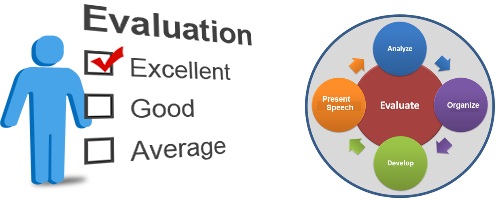
Toastmasters Evaluations
How well does a contestant evaluate a speech?
Many years ago a psychologist did an experiment He went to an Army Basic Training post and chose two platoons of trainees. The first platoon went through the normal rifle marcksmanship course in which they:
| Results: The first platoon began with most soldiers doing poorly, with jus a few good first time scores They progressively improved their scores at the range. All qualified as adequate shooters, Many attained Marksman or Expert levels | Toastmasters Evaluations Toastmasters learn by trying, getting help from others with feedback on their performance.Without that feedback, improvement is incredibly difficult. Toastmasters provides that feedback in a very Toastnastersly way. (I know, that isn't a real word, but ie makes the point) Once a toasmaster becomes a better speaker, he or she learns how to give an effective Evaluation to others. The Toastmasters Evaluation
| |
| The second platoon went through exactly the same training Except that nobody marked where the bullets struck the target. They were still "encoraged" to improve their techniqe, the same as the first platoon. They got no feedback on their progress. | The Second platoon started at about the same level as the first platoon. But, instead of improving their scores, their scores became worse, not better.
| Feedback -- Mentoring -- Help Feedback is one of the most imortant factors in learning a new skill. The only factor more important than feedback is dedication to improve, but even dedicated learners become discouraged without feedback. |
Evaluation Contestants show what they have learned about the most important aspect of learning. How to help others learn to communicate as well as they can. The Evaluation Contest may seem to some as the lesser of the two -- Speaking and Evaluating. - But experienced Toastmasters know that evaluation can be the most important skill to learn. You too can learn how to help others learn to communicate |
---
Download your speaker qualification form
This form must be filled out and submitted before the meeting to allow you to speak at the contest.
Deadline: the Contest chair must receive the form by end of day before the contest.
Email to Ellen Imo at ellen.m.ino@gmail.com
J
Use the paper to take your notes. To be clear - No Typing.
Watch the Model speaker and take your notes on paper.
After the model speaker has spoken, for your five minutes of preparation, you will be “invited” just like at the start today, to a breakout room when called by the “Sergeant at Arms”. Please look for it and accept it quickly.
The faster everyone gets into the room, the sooner you’ll get back to your notes.
Preparation doesn’t begin until everyone is in the room.
Once in the room, the Sgt at Arms must go over a few things.
Instructions:
You all will be asked to unmute your microphone. The Sgt at Arms will call out names of people who are muted.
The reasoning for unmute while you are preparing is so that the SAA can hear if anyone is typing or moving the mouse.
The Sergeant at Arms will announce when the timing begins.
When it ends, the SaA will announce it. He/She will tell the Zoom Master that the 5 minutes is completed.
Stop working on your notes
 | The SaA will ask contestants 2-6 to fold their paper in half and hold them -- or place them by their face, where he/she can see them. |
Contestants leave the room one-by-one
Zoom Master will tell the SaA to send out the first contestant.
The SAA will tell contestant 1 to leave.
While Contestant 1 is performing, Contestants 2-6 will be entertained by the SAA. You will be asked to participate in the conversation. The Rules state that those waiting their turn are not given an additional time to prepare. So, Northern Division’s interpretation is that the SAA will engage Contestants waiting in conversation.
When the Zoom Master says the main room is ready for the next contestant, the SAA will tell that contestant to leave the room and tell the contestant that they may start viewing their paper.
Going on Stage
Once in the main (Stage) room, please listen and follow the instructions of the Toastmaster in charge.
The process will repeat until the last contestant leaves the break out room.
Any Questions?